Portfolio

Teaching Portfolio · Chapter 4

Planning for Learning

This chapter shows how I plan learning as a journey rather than as isolated activities, helping students connect prior knowledge, address misconceptions, practise key ideas and apply Computer Science concepts with increasing independence.

Chapter purpose

Planning beyond a single lesson

As my teaching practice has developed, I have become increasingly interested in how students build understanding over time. A successful lesson is important, but learning does not happen in isolated moments. Students need opportunities to revisit ideas, connect new content to prior knowledge, practise key skills, address misconceptions and apply their understanding in increasingly complex ways.

In Computer Science, this matters because many topics are cumulative. Students often need earlier concepts before they can access later ones: distributed computing prepares students to understand crowdsourcing; binary supports later data representation; and programming concepts such as variables, selection, iteration and abstraction need to be revisited in different contexts before students can use them independently.
Planning thread

From distributed computing to crowdsourcing

The evidence in this chapter comes from an AP Computer Science Principles lesson on crowdsourcing. The lesson was planned as a learning sequence: students first recalled distributed computing, then experienced a live crowdsourcing demonstration, explored common misconceptions, analysed real examples, answered a hinge question and completed an exit ticket.

This sequence helped students see the conceptual bridge from machines working together to humans working together at scale. It also helped me plan not only what students would do, but how they would build meaning: from prior knowledge, to concrete experience, to explicit teaching, to collaborative application, and finally to individual assessment.

Evidence 4.1

Annotated Crowdsourcing Lesson Plan

An AP Computer Science Principles lesson plan showing how I planned a learning sequence around crowdsourcing.

Evidence extract

This lesson built on students' prior learning about distributed computing and extended the idea of collaboration from machines working together to people working together at scale. This helped students understand crowdsourcing as part of a wider learning journey, rather than as an isolated definition.

The lesson was sequenced through recall, live demonstration, explicit teaching of misconceptions, analysis of real crowdsourcing examples, a hinge question and an exit ticket. This progression moved students from prior knowledge to concrete experience, then to explanation and application.

The lesson evaluation shows how planning informed reflection. The live demonstration made the concept meaningful, while the Padlet task showed that collaborative work needed clearer roles and a mid-task checkpoint to make individual understanding more visible.

View evidence document

Crowdsourcing lesson plan

The original lesson plan is shown below in a compact preview. The reader can scroll inside the PDF or open it in a new tab.

Planning sequence Prior knowledge Active learning Formative assessment EAL support Exit ticket

Evidence 4.2

Common Misconceptions Slide

A slide used to make common misconceptions about crowdsourcing explicit before application tasks.

Evidence extract

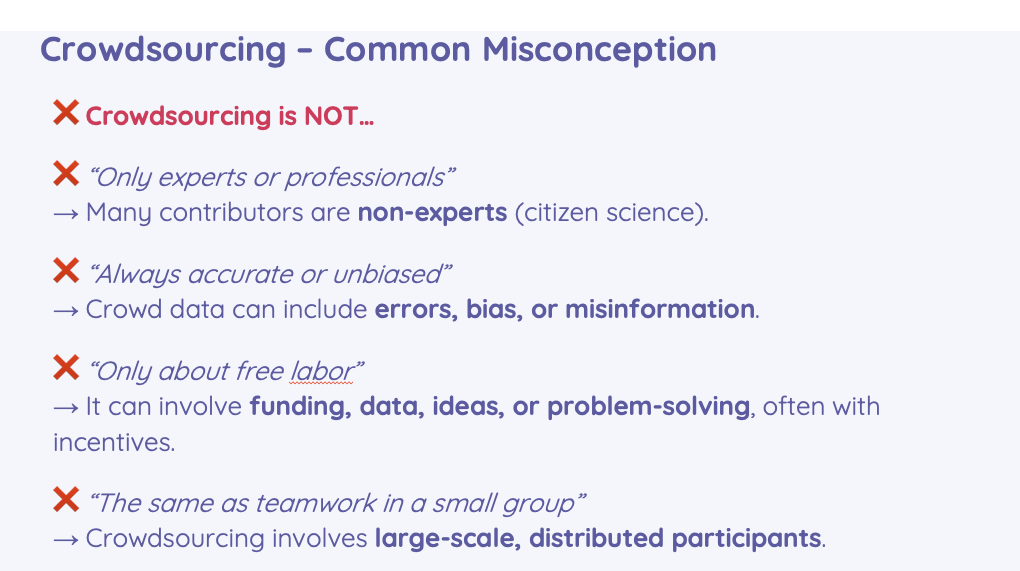
This slide shows how I planned for misconceptions before and during teaching. Students may assume that crowdsourcing is only for experts, always accurate, only about free labour, or the same as small-group teamwork.

By making these misconceptions explicit, I could address them through explanation, questioning and examples. This supported students in building a more accurate conceptual understanding before they analysed real crowdsourcing systems.

This matters for planning because misconceptions can block later learning. Addressing them directly helped prepare students for the hinge question, Padlet task and exam-style explanation.

View evidence image

Misconception slide

The slide is shown below as a compact preview. It can also be opened in a new tab for closer viewing.

Crowdsourcing common misconceptions slide
Misconceptions Concept clarity Questioning Technical vocabulary Planning for understanding

Evidence 4.3

Hinge Question Slide

A formative assessment question used to check whether students could apply the concept of crowdsourcing.

Evidence extract

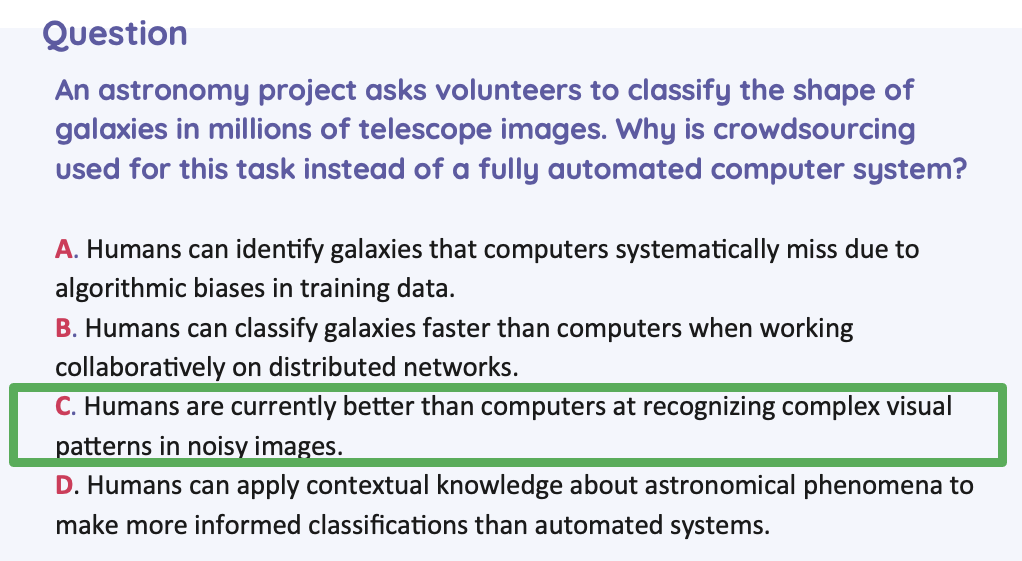
This hinge question checked whether students understood why crowdsourcing can be useful for complex visual classification tasks. The question asked students to apply the concept to an astronomy example, rather than simply repeat a definition.

The answer options were designed to reveal misconceptions. For example, some options focused on speed or contextual knowledge, while the intended understanding was that humans can sometimes recognise complex visual patterns in noisy images better than an automated system.

This evidence shows responsive planning: the hinge question gave me information about whether students were ready to move on or needed further clarification.

View evidence image

Hinge question slide

The hinge question is shown below as a compact preview. It can also be opened in a new tab for closer viewing.

Crowdsourcing hinge question slide
Hinge question Formative assessment Application Responsive teaching Conceptual understanding

Evidence 4.4

Padlet Collaboration Evidence

Anonymised collaborative responses showing how students applied crowdsourcing to real examples.

Evidence extract

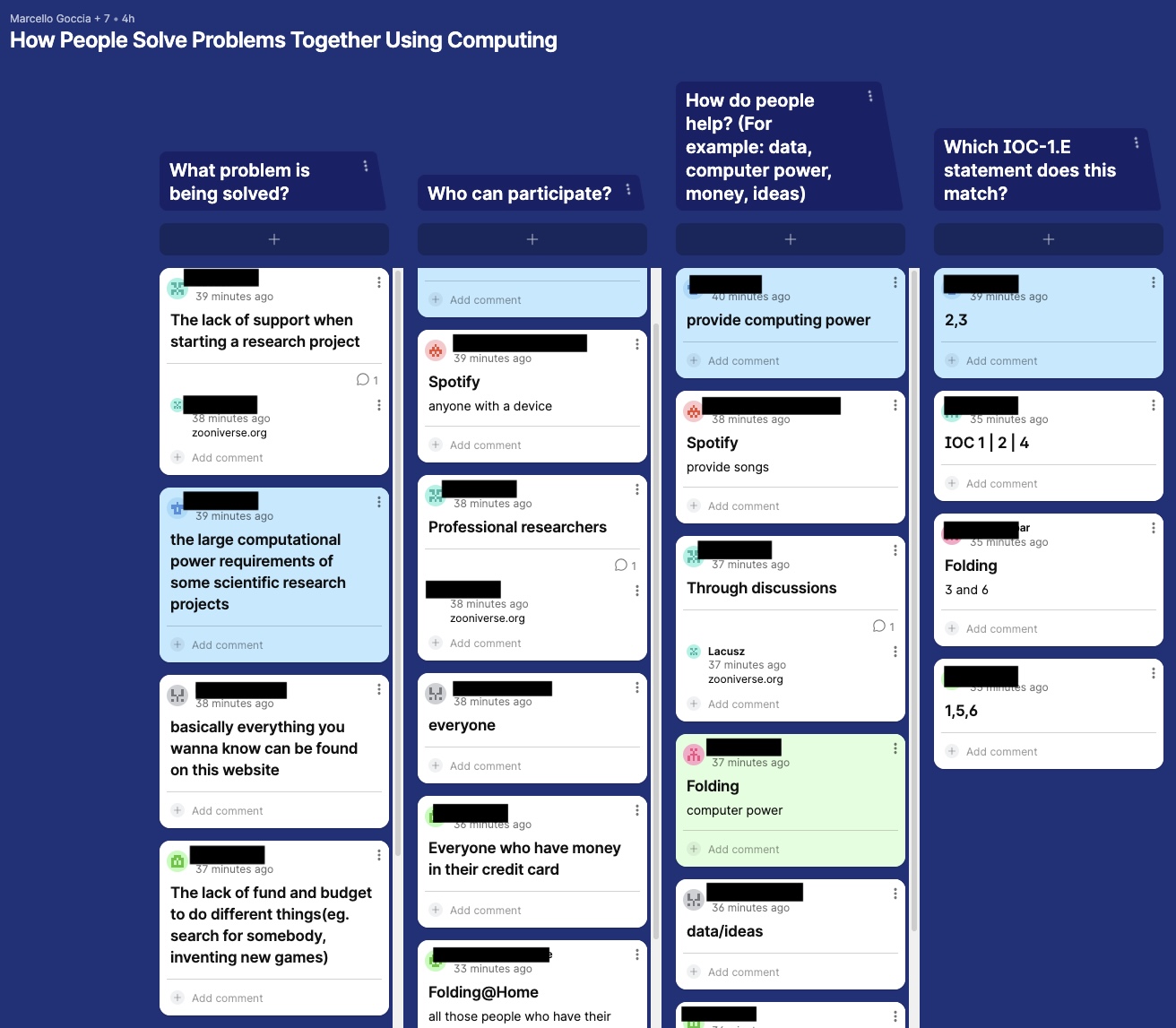
This Padlet activity required students to analyse real crowdsourcing examples by identifying the problem being solved, who could participate, what each person contributed and which IOC-1.E statement the example matched.

The activity moved students from whole-class explanation to collaborative application. Students connected examples such as citizen science, online music platforms and distributed participation to ideas of data, computing power, funding, ideas and problem-solving.

The evidence also informed my next planning decision. Although the Padlet showed engagement, the lesson evaluation identified that participation during collaborative work was uneven. In future I would assign clearer group roles and include a mid-task checkpoint to make individual understanding more visible.

View evidence image

Padlet student collaboration

The Padlet evidence is shown below as a compact preview. It can also be opened in a new tab for closer viewing.

Padlet student collaboration and contribution evidence
Application task Collaboration Specification link Student contribution Planning next steps

Evidence 4.5

Observation Feedback Extract

External observation feedback showing how the planned crowdsourcing sequence was visible in classroom practice.

Evidence extract

This observation feedback strengthens the chapter because it confirms that the lesson was not only well planned on paper, but also effective in practice. The observer highlighted the live crowdsourcing demonstration as a strength, noting that it was more effective than beginning with a definition because students experienced the concept first.

The feedback also recognised the planned sequence of learning: students activated prior knowledge through rapid review, responded to a poll used to identify misconceptions, participated in a live crowdsourcing activity, and then applied critical thinking to an ethical scenario. This supports the chapter focus on planning learning as a progression from prior knowledge to concept-building, application and reflection.

The feedback also gave a useful professional reminder about being explicit with lesson objectives. Although the slide was later shown, this reminds me that learning intentions need to be visible and clear at the right moment so that students understand the purpose of each stage of the lesson.

View evidence document

Crowdsourcing observation feedback

The original observation feedback is shown below in a compact preview. The reader can scroll inside the PDF or open it in a new tab.

Observation feedback Live demonstration Prior knowledge Misconception checking Critical thinking Clear objectives Outstanding practice